Sustainable Aquaculture Development

Updated: May 23, 2025
Empowering Freshwater Fishers for a Resilient Future
Objective: To improve the livelihood of rural inland fishing communities,
ensuring the sustainability of freshwater fishing through microfinance, capacity
building, infrastructure support, and ecological management.
Background: Sri Lanka has a vast network of inland fishing bodies- lakes,
rivers, reservoirs, and tanks. These have not been developed to their full
potential as a source of income and livelihood for the rural population.
Activities:
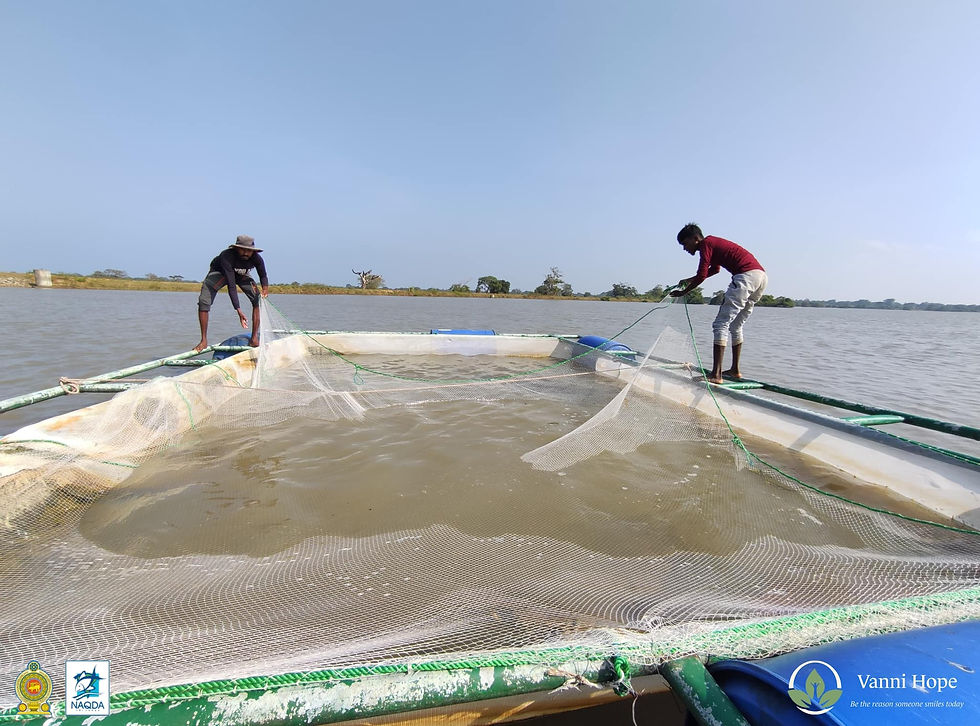
Organize local rural communities to form fisher societies to collectively
Engage in freshwater fishing
Establish saving societies for sustainable operations
Participate with the National Aquaculture Development Authority (NAQDA) and NGOs to regulate and monitor fishing activities
Provide microfinance to purchase nets and boats
Stock water bodies with fast-growing fish- tilapia, carp, and freshwater prawns
Train fishers on:
Sustainable fishing techniques
Best practices in aquaculture
Fish preservation and value addition
Pond management
Environmental conservation
Implement school-based programs on inland fishing and freshwater conservation
Outcomes:
Empowered self-governing fisher societies
Improved livelihoods, nutrition, and food security for rural communities
Improved ecosystems
Youth-driven innovation in fisheries
Intergenerational awareness and participation
Vision: To scale the program nationally, positioning the Sri Lankan inland fisher
communities as models of climate-resilient, community-driven, and economically vibrant rural economies.